

The Game Theory move that makes competitors irrelevant by making them partners

Fresh out of business school, armed with Porter’s Five Forces, a dog-eared copy of Competitive Strategy, and the unshakeable confidence of someone who had just spent a few months being told how markets work, I walked into a sales role in Saudi Arabia that proceeded to immediately dismantle several things I thought I knew. The moment that theoretical knowledge about what “My Customer Wants Me to Know” came crashing down was not a lost deal or a difficult client, but a simple proposal document for a large-scale digital transformation bid for a government entity in Saudi Arabia, where I opened the cover page and saw not one, not two, but three Fortune 500 technology company logos sitting side by side at the top of the page like they were old friends who had always done this sort of thing together.
These were companies that competed ferociously for the same enterprise accounts, hired aggressively from each other’s talent pools, and had entire competitive intelligence teams dedicated to tracking what the other was doing. And here they were, on the same proposal, dividing scope, sharing a commercial structure, and presumably having meetings where they agreed on things. I remember sitting with that document for longer than I needed to, not because the content was complicated but because nothing in my freshly minted business education had prepared me for the idea that competition and cooperation were not mutually exclusive states and that two things I had been taught to think of as opposites could exist simultaneously, in the same PDF, with everyone’s legal teams apparently having signed off on the arrangement.
I filed it away as an anomaly and an exceptional case, the likes of which happens in government bids where the scope is too large for any one vendor to credibly claim they can do it all. And so, I did what any salesman would do when I won part of the deal for the company, I bought a car.
A car in disguise
If you have driven on Indian roads in the last decade with any degree of attention, you have almost certainly seen a Toyota Glanza and a Suzuki Baleno within minutes of each other, possibly at the same traffic light, and if you looked closely enough, you would have noticed something mildly disorienting.
Exhibit•Toyota and Suzuki(3 items)▼

[1/3]Suzuki Baleno and Toyota Glanza (2026)

[2/3]Suzuki Baleno and Toyota Glanza (2026)

[3/3]Suzuki Baleno and Toyota Glanza (2026)
They are, for almost every practical purpose, the same car sharing the same platform, same engine, same interior architecture, different badge on the bonnet and a slightly different grille treatment that Toyota’s designers presumably had to produce with straight faces. The Baleno was the first car to be rebadged by Toyota under their partnership, with 62% of Toyota cars sold in some months being essentially Suzuki underneath the branding. In return, Maruti Suzuki gets access to Toyota’s hybrid technology and a pathway into markets and segments it could not have entered alone at the same cost.
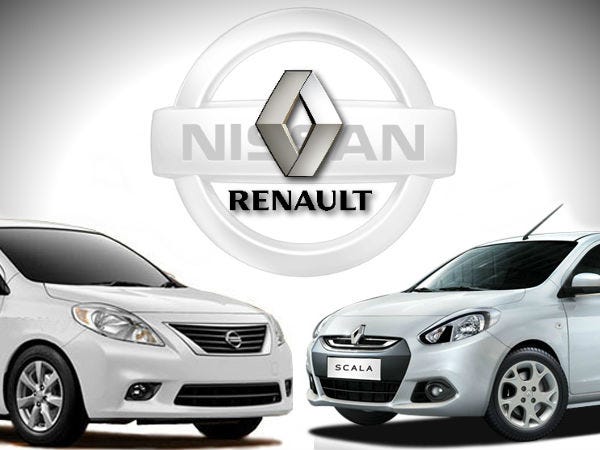
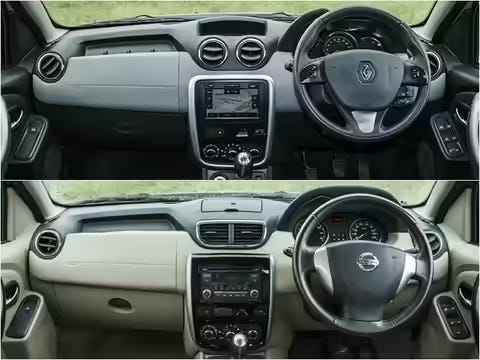
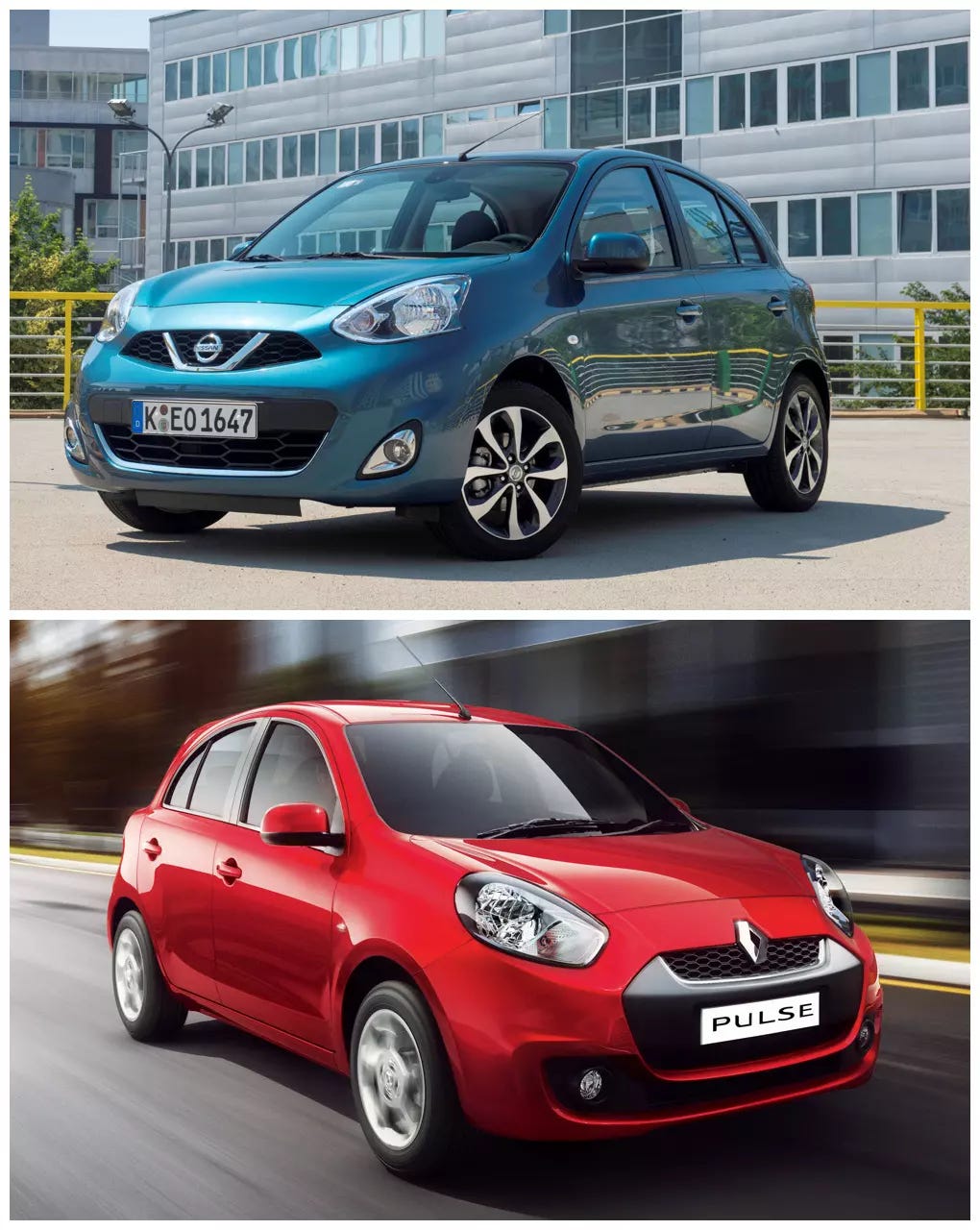
And this, it turns out, was not even close to the first time this had happened on Indian roads. The Renault-Nissan Alliance had been running the same playbook years earlier, with the Nissan Micra being rebadged and sold as the Renault Pulse, the Nissan Sunny becoming the Renault Scala, and the Renault Duster receiving cosmetic surgery and reappearing as the Nissan Terrano. The Renault Pulse based on the Nissan Micra and the Duster-Terrano pair were among the clearest early examples of badge engineering in India, though neither pairing performed as well commercially as the Toyota-Suzuki arrangement would later manage.
Exhibit•Renault and Nissan Partnership in India(6 items)▼

[1/6]Nissan Sunny and Renault Scala
[2/6]Nissan Sunny and Renault Scala

[3/6]Nissan Terrano and Renault Duster

[4/6]Nissan Terrano and Renault Duster
[5/6]Nissan and Renault Interior
[6/6]Nissan Micra and Renault Pulse
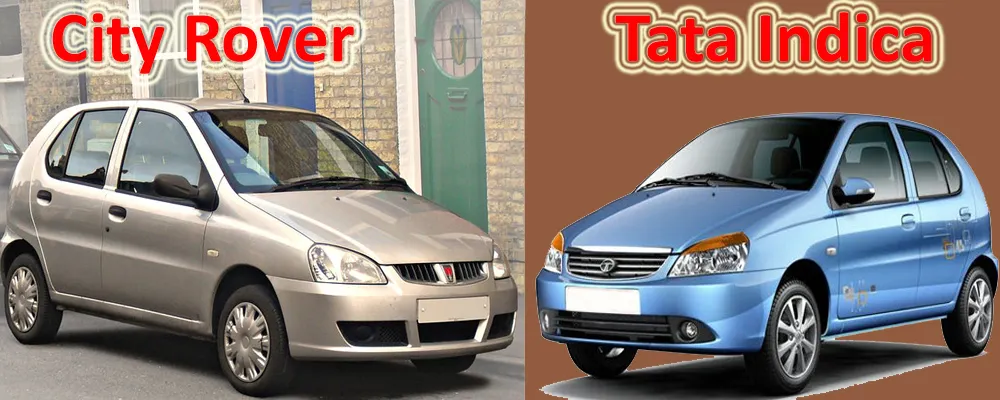
Go back further and you find the Tata Indica being rebadged as the Rover CityRover for the British market, the Daewoo Matiz reappearing as the Chevrolet Spark, and a long international history of Subaru and Chevrolet sharing the Forester, Volkswagen and Skoda sharing the Vento and Rapid, Renault and Mahindra sharing the Logan platform for the Verito, and so on stretching back decades into automotive history.
Tata Indica in India and City Rover in UK
What I had dismissed as an anomaly in a Saudi ministry bid was, apparently, one of the oldest and most rational strategies in competitive business, and it had been hiding in plain sight on Indian roads the whole time, dressed up as a hatchback.
There is a word for this and it comes from Game Theory
The word is coopetition, a portmanteau of cooperation and competition that was formally introduced to the business strategy world by Adam Brandenburger and Barry Nalebuff in their 1996 book of the same name, though the practice had existed in industry for decades before anyone gave it a name. The concept is rooted in game theory, specifically in models that go beyond purely competitive or purely collaborative games to describe the large territory in between, where competitors share certain dimensions of their value chain while continuing to compete on others.
Coopetition describes situations where competing entities work together toward a common goal or share resources while still maintaining competitive interests in other areas, which is a precise description of everything from that Saudi education bid to the Glanza-Baleno arrangement, even if nobody in those negotiations was necessarily thinking of it in those terms at the time.
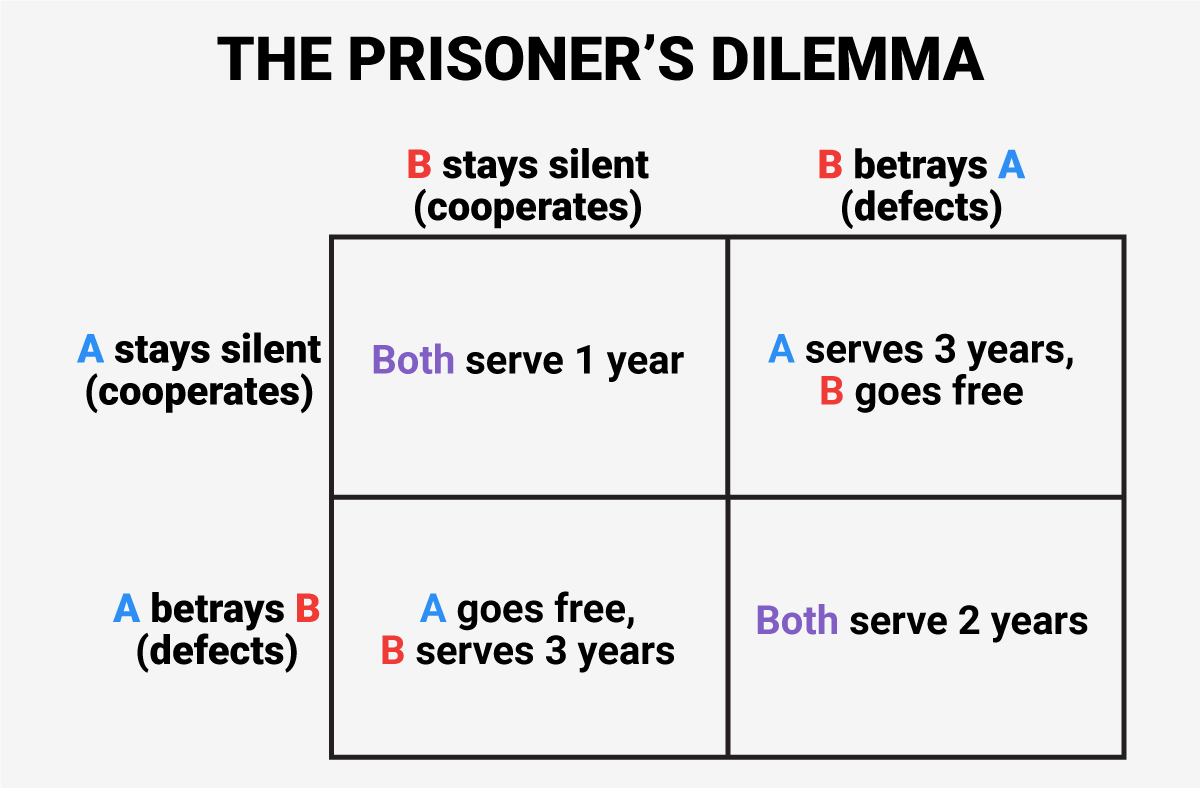
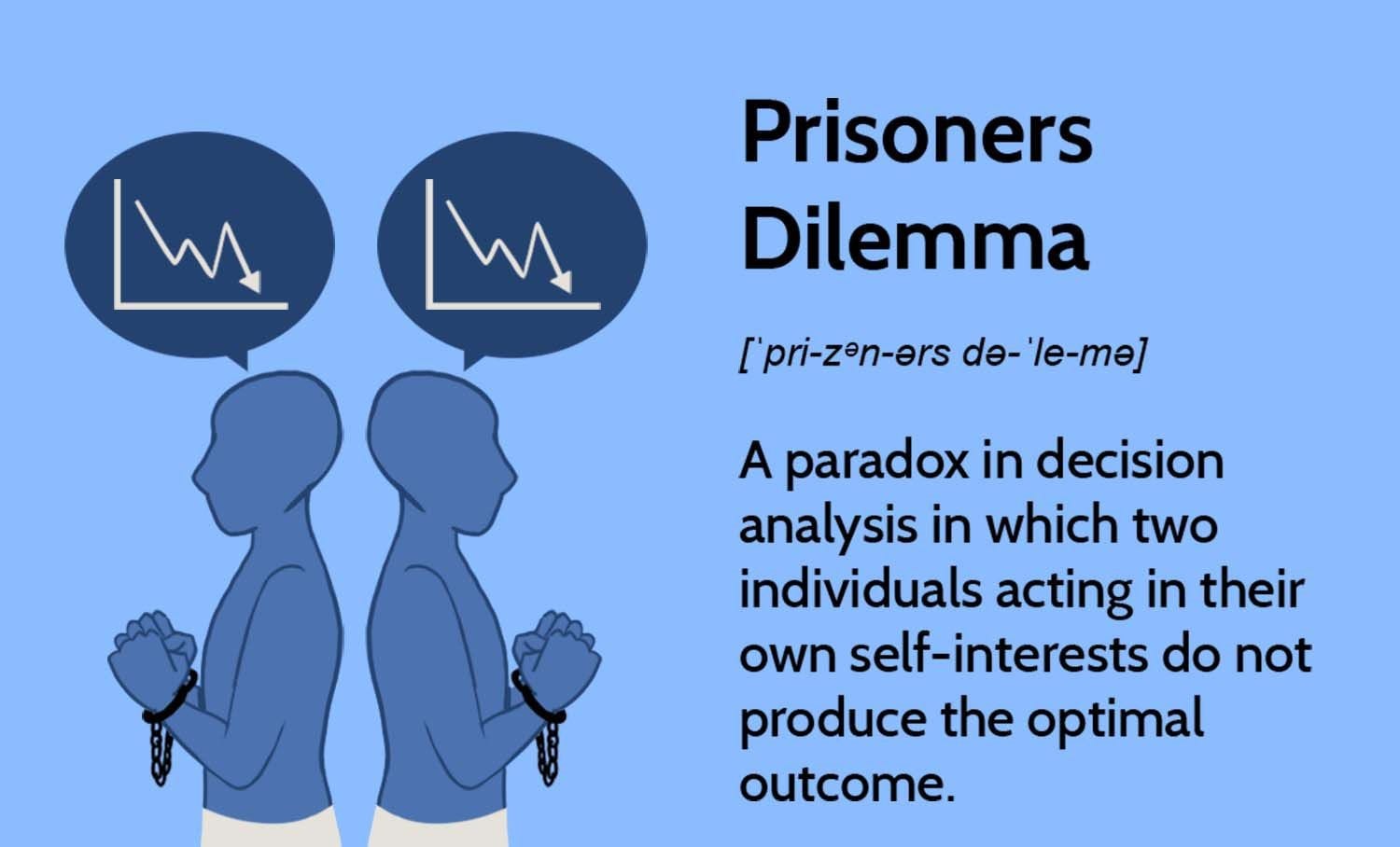
Exhibit•Prisoner's Dilemma(2 items)▼
[1/2]
[2/2]
The game theory logic underneath coopetition is not complicated once you see it, though it runs completely counter to the instinct that competition is always a zero-sum game where one player’s gain is another’s loss. The prisoner’s dilemma, one of game theory’s most well-known models, describes a situation where two players both achieve a worse outcome by competing than they would by cooperating, but where each player’s individual incentive pushes them toward competition anyway because the risk of being the one who cooperates while the other defects is too costly. Coopetition is essentially what happens when the players in a real-world version of this game are sophisticated enough to identify the dimensions on which cooperation produces a better outcome for both, carve those dimensions out, and continue competing on everything else. The Toyota-Suzuki partnership cooperates on platform manufacturing and hybrid technology access while both companies compete for the same buyer’s wallet at the showroom door. The Renault-Nissan Alliance shared an entire manufacturing plant in Chennai while their commercial teams were presumably still tracking each other’s market share with some degree of tension.
The Saudi bid worked the same way, where three F500 companies that would have competed destructively for a contract too large for any one of them, instead dividing scope in a way that made all three more credible and gave each of them a piece of a deal they might otherwise have all lost to a systems integrator who could credibly claim to cover the whole thing.
When the planet becomes the reason to Cooperate
All of the above examples are coopetition driven by commercial logic and it is the math of the deal that makes cooperation more rational than competition, and the companies involved are primarily motivated by their own economics. While this in itself is a good move, and it has produced genuinely useful outcomes, but it is also fairly bounded in ambition. What is happening right now in sustainability, and specifically in India’s energy transition, is something structurally similar but operating at a scale and with stakes that make the automotive badge engineering examples look like a warm-up act.
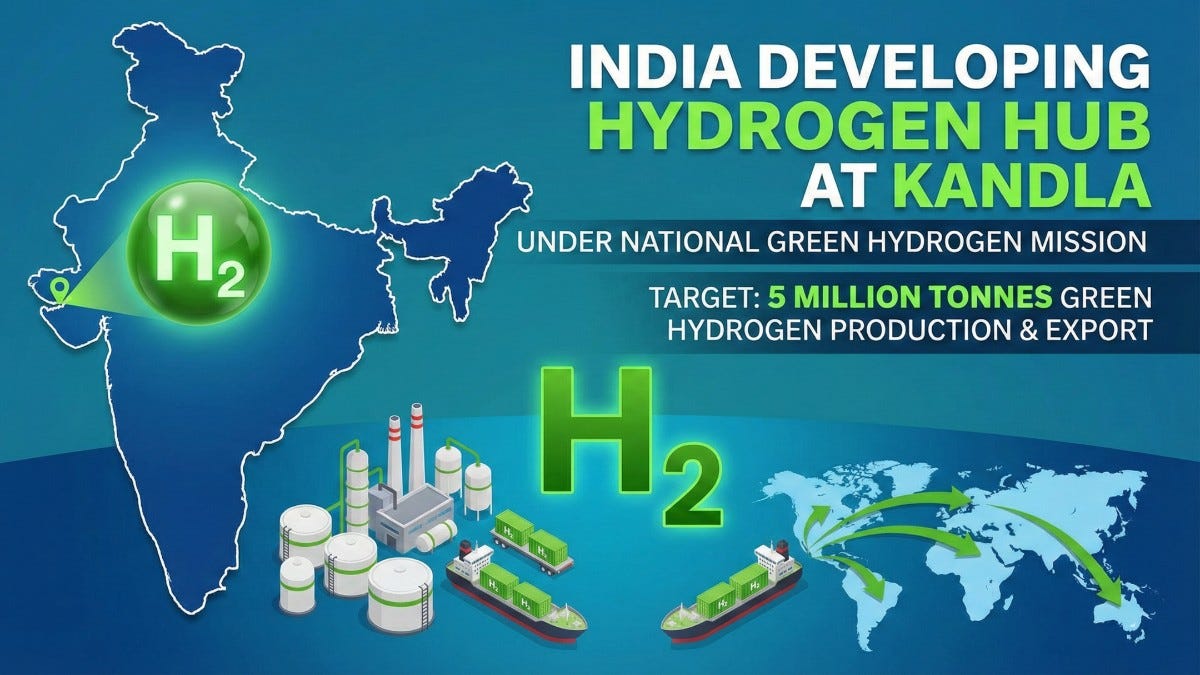
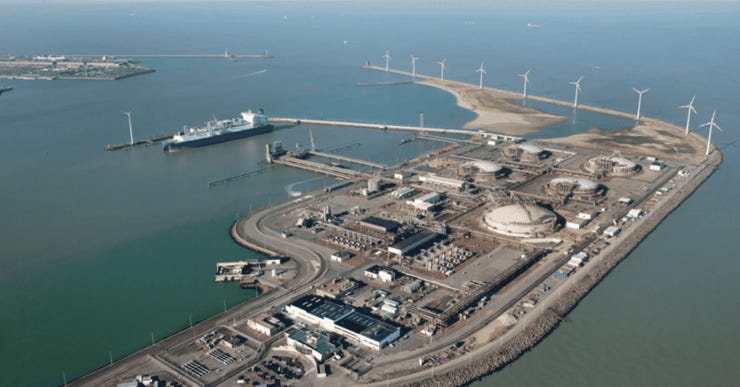
Exhibit•Hydrogen Hub, Kandla Port, Gujarat, India(2 items)▼
[1/2]
[2/2]
Reliance Industries, Larsen and Toubro, Greenko Group, and Welspun New Energy are jointly developing a green hydrogen hub in Kandla, Gujarat, a project valued at USD 12 billion. Companies that generally compete across energy, infrastructure, and industrial sectors with the kind of intensity that makes a Toyota-Suzuki showroom rivalry look almost polite, and yet here they are, on the same project, because the infrastructure problem they are trying to solve, i.e., building a green hydrogen ecosystem from near-scratch in a country where the technology is still maturing and the economics are not yet competitive with fossil fuels, is simply too large and too capital-intensive for any one of them to solve alone in a timeframe that makes commercial sense.
Adani, meanwhile, has partnered with TotalEnergies of France in a USD 50 billion commitment to develop green hydrogen production infrastructure across India over the next decade, with TotalEnergies acquiring a 25% stake in Adani New Industries. A partnership between an Indian conglomerate and a French energy major that compete in overlapping markets across Asia, Africa, and the Middle East, cooperating on the one problem that neither of them can afford to get wrong alone. India commissioned its first off-grid 5 MW green hydrogen plant in Kutch, Gujarat in June 2025, powered entirely by solar energy and battery storage, a milestone that exists because of a partnership structure that would have made my B-school strategy professor reach for a whiteboard.
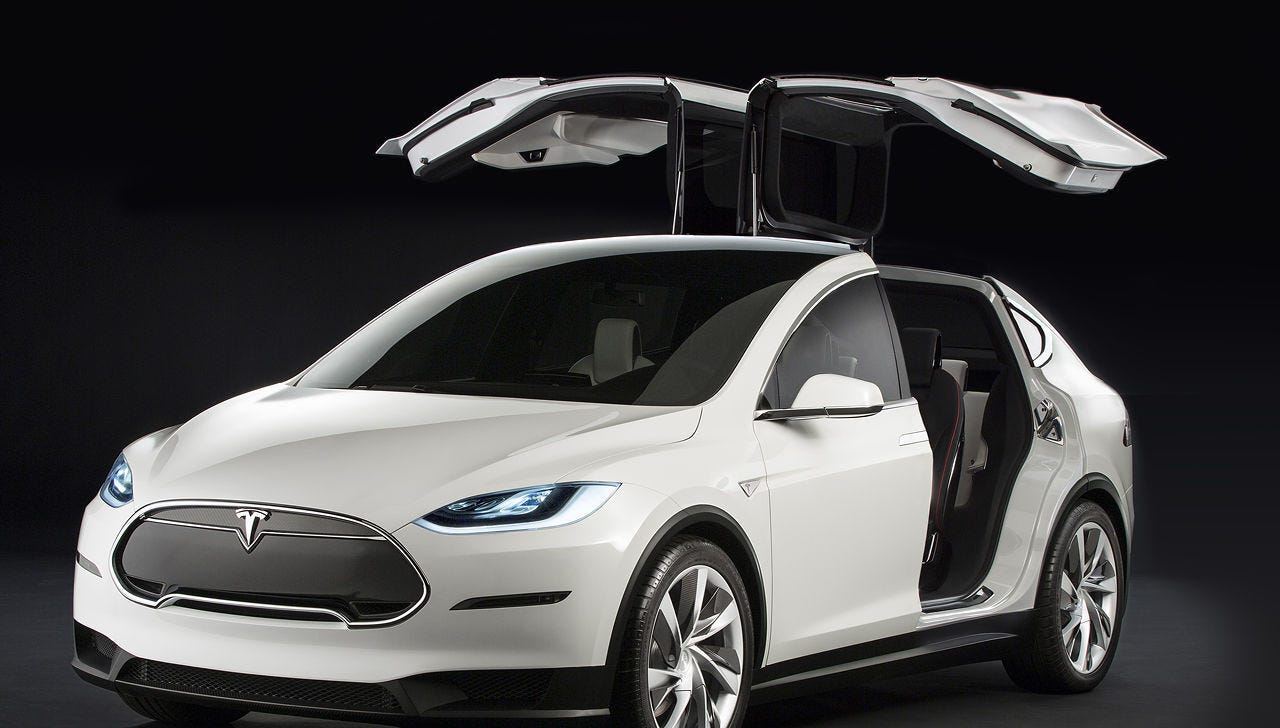
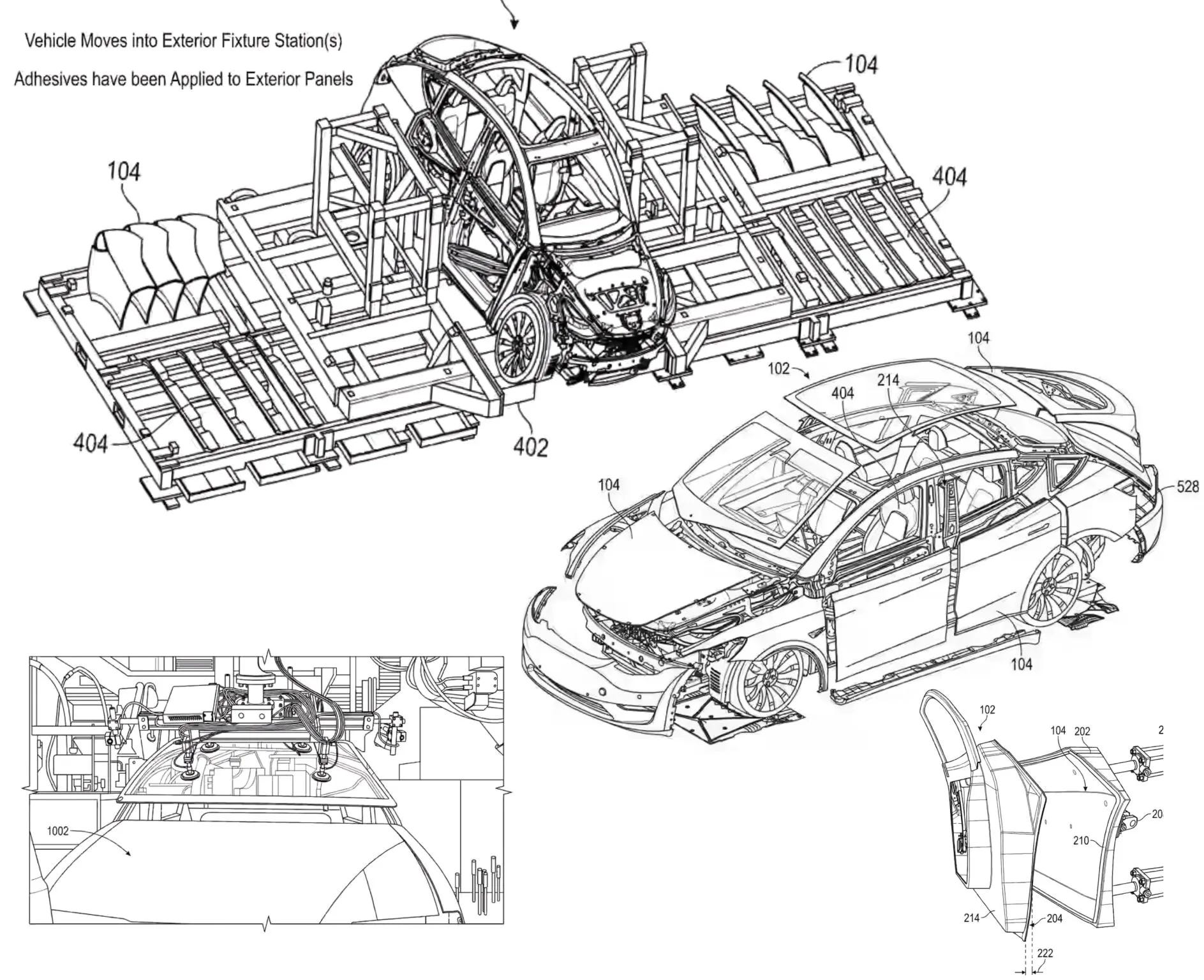
And then there is Tesla, which made a move in 2014 that looked like altruism at the time and reads very differently once you understand the game theory underneath it. Tesla opened its patents to encourage widespread EV adoption, accelerating the global transition from fossil fuels and simultaneously opened access to larger patent pools from others while benefiting from unified technology standards.
Exhibit•Tesla Patents opened up to the world(2 items)▼
[1/2]
[2/2]
What Tesla actually did was look at its situation, a company with genuinely advanced EV technology sitting inside a market so small that even dominant share of it was insufficient to fund the next generation of development, and conclude that growing the entire market was more valuable than protecting its slice of a tiny one. An economist from Boston University put it more plainly, predicting that the conditions making knowledge sharing advantageous would not last forever, and that once EVs replace much of the gasoline car market, competition from other EV makers would affect Tesla’s profits, making such extensive sharing no longer beneficial. Reiterating that coopetition is not a permanent state of affairs, it is a strategic posture that is rational under certain conditions and irrational under others, and the companies that manage it well are the ones who know which game they are playing at any given moment.
The Government as game designer
One of the things that gets underappreciated in all of these stories is the role of the entity setting the rules of the game, because coopetition does not emerge from nowhere, it tends to emerge when the conditions are structured in a way that makes cooperation more rational than pure competition, and governments are often the ones doing that structuring whether or not they are thinking of it in those terms.
India’s National Green Hydrogen Mission, which provides incentives, manufacturing subsidies, and offtake guarantees for green hydrogen production, is doing this by creating a policy environment in which the risk of going alone on green hydrogen infrastructure is high enough and the rewards of shared infrastructure development are significant enough that Reliance, Adani, L&T, and Tata all end up making bets in the same direction while still competing on price, technology choice, and market positioning within that shared direction. Major private players including Adani, Reliance, and L&T are all investing heavily in green hydrogen projects under the National Green Hydrogen Mission, which is not coincidence but it is the government as game designer, setting the payoff structure in a way that makes the cooperative outcome rational for everyone involved.
The AI industry is running the same playbook
If the automotive and energy examples feel like polite, well-behaved versions of coopetition, the AI industry is running a far messier, higher-stakes, and considerably more interesting version of the same game and the sustainability implications of how it plays out are larger than most of the conversation around it acknowledges.
Lets talk about the most prominent frenemy relationship in technology right now: Microsoft and OpenAI. Microsoft provided the massive Azure compute resources necessary for OpenAI to scale GPT-4, while OpenAI provided Microsoft with the technology to integrate AI across its entire software suite from Bing to Office 365, a partnership so structurally intertwined that unpicking it would be complicated for both parties, and yet one where Microsoft is simultaneously developing its own internal AI capabilities and OpenAI is actively diversifying away from Azure dependency. They are, in the most literal sense, cooperating on the infrastructure that makes both of them viable while competing on the products that run on top of it, and the tension in that arrangement is visible enough that industry observers have taken to calling it a frenemy relationship without entirely meaning it as a compliment.
Then there is Meta, which took a different approach entirely with its Llama open-weights strategy. By releasing the Llama series of models as open-weights, Meta is effectively commoditising the proprietary moats of companies like OpenAI and Google, forcing competitors to either lower prices or innovate faster while Meta benefits from a global community of developers optimising their models for free. This is coopetition as strategic aggression dressed up as generosity, the same move Tesla made with its patents in 2014, applied to model weights in 2024 and 2025, and with the same underlying logic; if you cannot win by keeping the resource scarce, win by making the resource abundant and building your competitive advantage on top of the ecosystem that abundance creates.

DeepSeek is a Chinese AI Lab
DeepSeek, a Chinese AI lab, trained a model competitive with GPT-4o for a reported $5.5 million, a tiny fraction of what OpenAI spent by building on the open-source ecosystem that Meta’s Llama releases helped establish. The cooperation that Meta initiated has accelerated the very competition it now faces, which is exactly what game theory would predict and exactly what the Boston University economist warned about in the Tesla context.
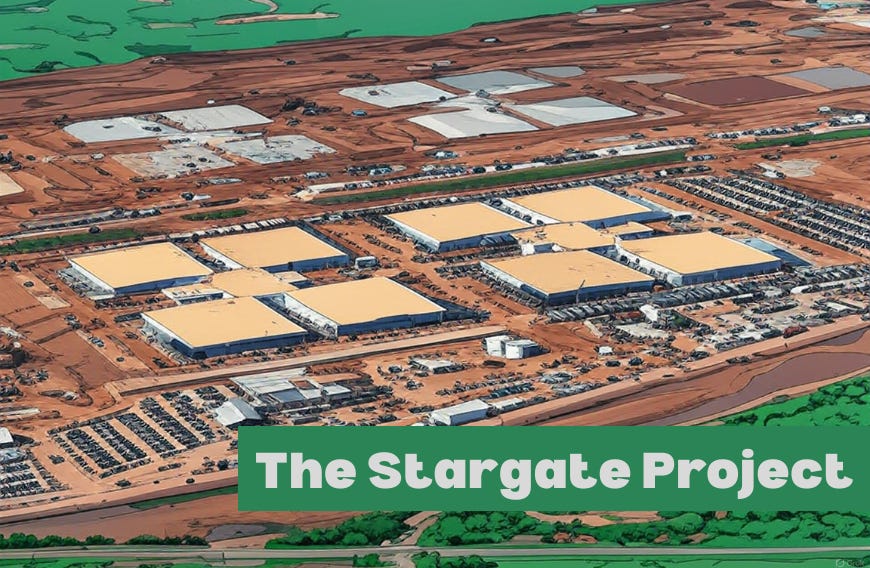
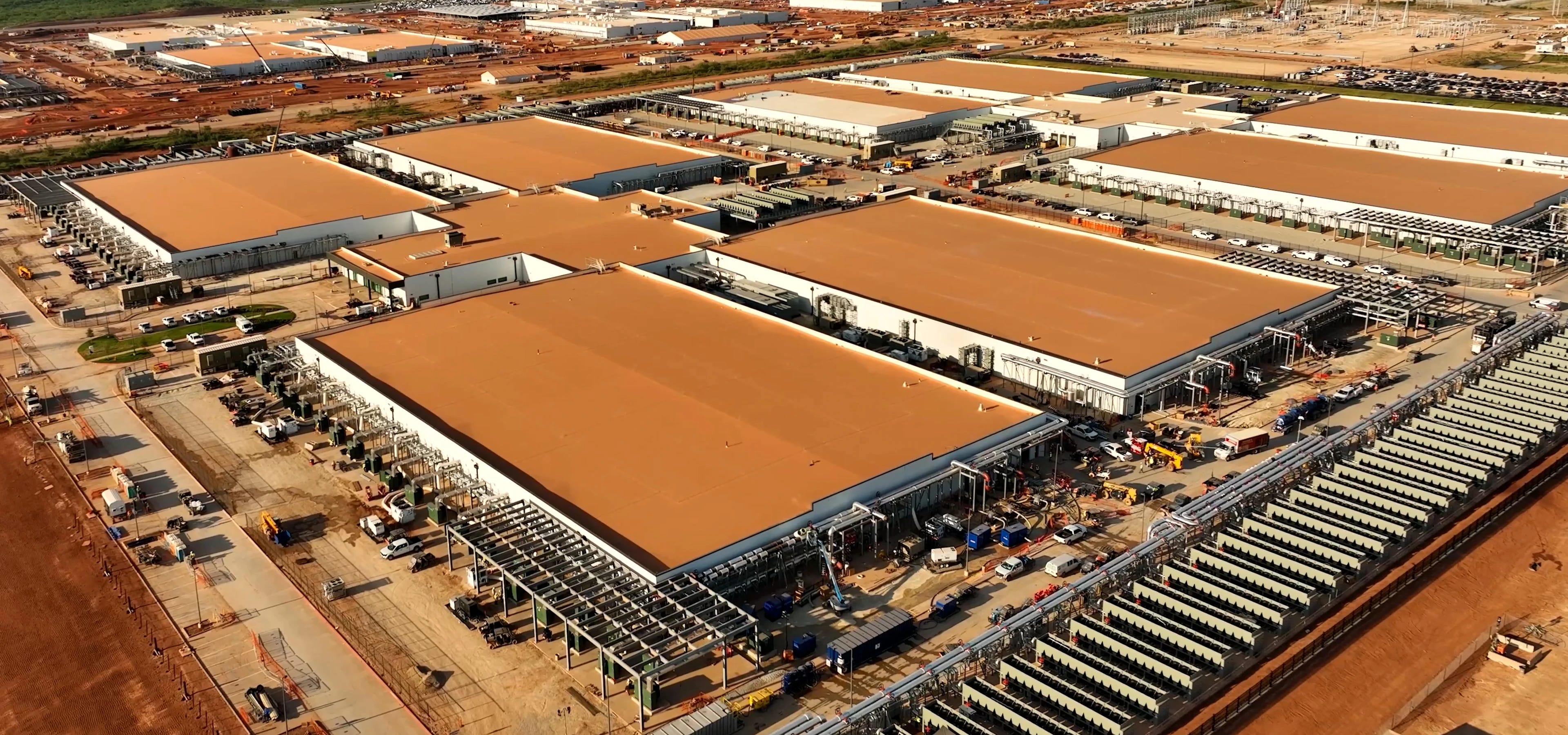
And then there is Stargate, a joint venture between SoftBank, OpenAI, and Oracle committing up to $500 billion to build AI infrastructure in the United States, three entities that compete across cloud, enterprise software, and AI services simultaneously building shared infrastructure because the capital requirements of the next generation of AI training clusters are too large for any one of them to absorb alone without the kind of balance sheet risk that makes investors nervous.
Exhibit•$500B Stargate JV(2 items)▼
[1/2]
[2/2]
AI Coopetition meet sustainability
The sustainability dimension of all this AI coopetition is where the story gets both more interesting and more uncomfortable, because the same companies that are cooperating on AI infrastructure are generating sustainability consequences that none of them can solve alone either, and the coopetitive response to that shared problem has been considerably less impressive than their infrastructure partnerships.
Microsoft, OpenAI, and NVIDIA jointly published a paper on power stabilisation for AI training data centres, demonstrating how full-stack innovations across rack-level hardware, firmware orchestration, and predictive telemetry can reduce power spikes by 40% and improve operational efficiency across AI training clusters. Three companies that compete on chips, cloud, and models, cooperating on the shared infrastructure problem of power delivery because grid instability affects all of them equally and none of them can solve it alone. This is the good version of AI coopetition on sustainability, very specific, technical, and producing measurable outcomes.
The lesser version is the Coalition for Sustainable AI, launched at the AI Action Summit in Paris in February 2025 by France in collaboration with the UN Environment Programme and the International Telecommunications Union, with a mission to align AI development with environmental considerations and harness AI to accelerate decarbonisation. NVIDIA, IBM, Lenovo, Salesforce, SAP, and Schneider Electric all signed up. OpenAI, Microsoft, AWS, Google Cloud, and Anthropic, the companies whose infrastructure decisions actually determine AI’s environmental footprint were all absent from the launch. Which is, in game theory terms, the free rider problem made flesh, everyone benefits from the sustainability credibility that the coalition creates, the companies with the largest actual impact quietly decline to join, and the coalition ends up being a statement of intent by the vendors rather than a binding commitment by the hyperscalers who need to make it.
This is coopetition failing at exactly the point where it matters most, and the reason it fails is the same reason the prisoner’s dilemma produces bad outcomes when the rules are not designed carefully enough, joining the coalition costs something in terms of commitments and scrutiny, defecting by staying out costs nothing as long as enough other credible names are on the letterhead, and the individual incentive to free-ride overwhelms the collective incentive to cooperate. The government as game designer problem surfaces again because without the regulatory framework that makes staying out of the sustainability coalition more costly than joining it, the companies most capable of moving the needle have every rational incentive to observe from a distance and issue a press release about their own net zero commitments instead.
Lack of Cooperation in the Hardware Layer
There is one more dimension of AI coopetition and sustainability that I wrote about at length in my previous piece on GPU waste (both on SubStack and Medium), and that deserves a mention here because it is the most glaring gap in the current coopetitive landscape, viz-a-viz, the hardware retirement problem.
The training of state-of-the-art large language models requires an astronomical amount of compute, creating a sharp divide between those who possess the infrastructure and those who possess the algorithmic innovation, and the replacement cycle that this dynamic drives is creating an e-waste problem that no single hyperscaler is going to solve on their own. The economics of secondary GPU markets, the firmware locks that complicate repurposing, the depreciation schedules being used as earnings management levers, all of these are shared infrastructure problems that affect every major AI player simultaneously, and all of them are the kind of problem that coopetition, designed well, is precisely suited to address.
The right-to-repair movement for consumer laptops, which I covered in the first piece in this series(again on SubStack and Medium), is slowly producing legislative progress with more than 33 right-to-repair bills were introduced across 13 US states in January 2026 alone. The equivalent movement for AI accelerators, which cost orders of magnitude more and generate proportionally larger e-waste consequences, is essentially non-existent, partly because the companies that would need to cooperate on it are the same ones whose competitive advantage depends on keeping their hardware ecosystems proprietary. Not only is NVIDIA’s CUDA moat just a software advantage, but it is also a lock-in mechanism that makes cooperation on hardware lifecycle extension structurally irrational for the company whose business model depends on the replacement cycle continuing.
I believe this is the version of the game where the government as game designer is most urgently needed, and most conspicuously absent, and where the coopetition that could produce genuinely good sustainability outcomes is being blocked not by lack of awareness but by a payoff structure that nobody with the power to change it has yet decided to change.
The Honest Caveat
Coopetition is not a sustainability silver bullet, and it is worth being clear about what it is and is not. It is a game theory outcome, not a values statement and companies cooperate when the math makes it rational and compete when the math makes that rational, and the fact that a particular cooperation happens to benefit the planet is often a byproduct of the economics rather than the motivation. Coopetition for sustainability involves trade-offs between organisational benefit and societal good, with different types of trade-offs pointing to different pathways of achieving sustainability, meaning not every cooperative arrangement produces a clean win for both the business and the environment simultaneously.
The Renault-Nissan badge engineering in India, for instance, did not produce particularly good outcomes for anyone with the Renault Pulse and Nissan Terrano both underperformed commercially, the partnership did not meaningfully accelerate either company’s sustainability agenda, and the Indian consumer ended up mildly confused about which company had actually built the car they were looking at. Coopetition that is driven by genuine shared strategic logic, like the Toyota-Suzuki arrangement or the India green hydrogen partnerships, tends to produce more durable outcomes than coopetition that is primarily a commercial shortcut.
The other caveat worth naming is that coopetition works best when the game designer as the government, the regulator and the procurement body sets the rules well enough that cooperation on the shared problem does not simply become collusion on the competitive one. The line between a consortium bidding on a government contract and a cartel dividing up a market is not always as clear as everyone in the room would like, and the legal and regulatory frameworks that define where that line sits vary significantly across markets, which is one reason why the Indian green hydrogen partnerships involve different combinations of players working on different aspects of the same problem rather than all of them signing a single joint venture agreement.
So Where Does This Leave The Rest Of Us
When I look back at that Saudi proposal, what strikes me now is not that it was surprising but that I was surprised by it, because the logic underneath it was not mysterious. Rather the application was game theory on a procurement situation where the math was obvious to anyone who was paying attention. The three F500 companies in that bid had clearly run the numbers, concluded that competing separately reduced all of their individual chances of winning to something insufficient, and structured a cooperation that increased all of their chances while preserving their independence on everything that did not need to be shared.
That logic has not changed but what has changed is the scale of the problems that require it and the visibility of the stakes involved, because when the shared problem is not a government ministry contract but a green hydrogen ecosystem or a planetary carbon budget, the case for cooperation becomes simultaneously more obvious and more urgent, and the cost of everyone deciding to compete alone becomes measurable in ways that a lost bid never was.
The Toyota Glanza is, at its core, a perfectly ordinary hatchback. But what it represents matters more, because two companies that compete in the same market, sharing the cost and risk of building something neither of them could have built as well alone and this will be one of the more quietly important ideas in how the next decade of sustainability actually gets funded and built. The planet does not care whether the cooperation is motivated by commercial logic or genuine environmental concern, and in that particular indifference, there might be more room for optimism than the usual sustainability conversation tends to allow.
So here are the questions I want to leave you with, and I genuinely want to hear your answers in the comments, because I do not think any of these have obvious answers and I am more interested in the conversation than in being right about them. In your industry, in your organisation, is there a problem large enough that your biggest competitor might actually be the right partner to solve it with, and if there is, what is stopping that conversation from happening? An example in the Insurance industry is the data standard setting, which has pockets of work here and there, but nothing concrete to derive extra-ordinary benefits to all participants.
And for the AI and tech folks specifically: the hyperscalers cooperated on power stabilisation because grid instability affected all of them equally. But what would it take to produce the same cooperation on hardware lifecycle and e-waste, given that the current payoff structure makes free-riding more rational than participating? And finally, the most pointed version of the question: if the Coalition for Sustainable AI cannot get OpenAI, Microsoft, AWS, Google, and Anthropic in the same room to sign the same commitments, what game design change, including but not limited to regulatory, commercial, or reputational, would actually move that needle?
I do not have clean answers to any of these. But I am fairly confident that the companies and governments that figure out the game design first are going to determine more of the planet’s trajectory over the next decade than the ones with the best models, the fastest chips, or the most ambitious net zero press releases. To leave you with a final thought, I do not believe AI as a technology enabler will create a lot of trillion dollar companies, but it will enable multiple million dollar companies, all co-existing peacefully in a sustainable fashion, co-operating and competing at the same time. Agree?
This post is not AI authored. I love to research and write about topics like these, which stemmed from some event in my life. If you like what I wrote, and my style, follow for more random ramblings in the future.